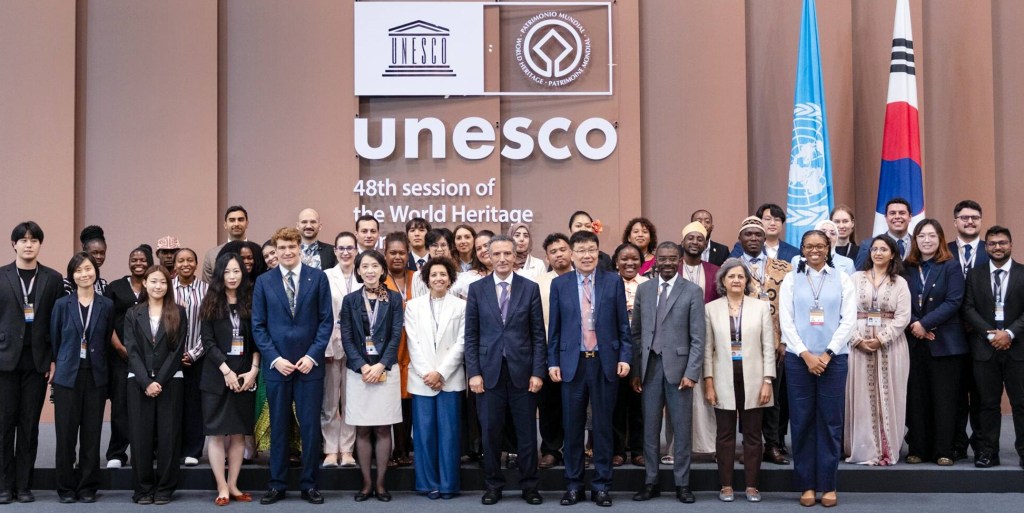
The 48th session of the UNESCO World Heritage Committee is taking place in Busan (Republic of Korea) from July 19 to 29. Among other issues, the session will address the state of the Curonian Spit—a joint Russian-Lithuanian site (listed as No. 994). The World Heritage Committee is concerned about developments on the Russian section of the spit. Through the Lithuanian delegation, the organization Ecodefense submitted a statement prepared specifically for the 48th session; it outlines the most critical issues threatening the Outstanding Universal Value of the Curonian Spit as a World Heritage site.
Of particular concern is the development of an investment project—officially titled «Construction of an international passenger river border crossing point, a protective breakwater, and a hotel-recreational complex, along with the reconstruction of hydraulic engineering structures in the settlement of Rybachy (Zelenogradsky Municipal District, Kaliningrad Region).» Aptly dubbed the «Wall of Death» by local residents, the project has sparked widespread protests.
The draft decision of the 48th session of the World Heritage Committee states: Proposals for the development of large-scale tourist facilities in the fishing village of Rybachy raise significant concerns regarding their scale and potential impact. These include plans for an international passenger river crossing point, a protective pier, a hotel and recreational complex, and the reconstruction of hydraulic structures. Taken together, these interventions risk overwhelming the character and capacity of this small settlement. Full details of the development, together with the corresponding impacts assessments, should be submitted to the World Heritage Centre for review, in accordance with Paragraph 172 of the Operational Guidelines, prior to any approval or implementation decisions.
In accordance with Paragraph 172 of the Operational Guidelines, States Parties to the Convention are required to inform the Committee of their intention to undertake or authorize major restoration or new construction projects within the area protected by the Convention that may affect the property’s Outstanding Universal Value. Such notification should be made as early as possible (for example, before drafting the main documents for specific projects) and prior to making any decisions that would be difficult to reverse, so that the Committee may assist in identifying appropriate solutions to ensure the full preservation of the property’s Outstanding Universal Value.
The investment project agreement was signed by the Governor of the Kaliningrad Region in March 2023, yet the World Heritage Committee was never officially notified. Ecodefense assumed this responsibility by submitting a statement to the Committee in September 2024 containing available information on the project to construct a reclaimed island in the Curonian Lagoon and build high-rise hotels—developments that threaten the lives of tens of thousands of migratory birds.
In January 2026, following demands from the Committee, the Russian Ministry of Natural Resources managed to inform the World Heritage Committee about the grandiose project, without providing any documentation, but only stating that ‘within the boundaries of the village of Rybachy, located on the Curonian Spit, the owner of the land is conducting scientific research and developing project documentation’ and ‘currently, it is premature to assess the impact of the proposed activity on the heritage property due to the fact that the environmental surveys (research work), on the basis of which design decisions will be made and design documentation will be developed, including a description of design solutions, research results, and an environmental impact assessment, have not yet been completed’.
At the same time, public hearings regarding the environmental impact assessment (EIA) materials for the aforementioned investment project were announced as early as March 2026. The content of the EIA—which distorted expert assessments and deliberately concealed risks—sparked a wave of outrage among experts and residents of the Kaliningrad region, and the public hearings were cancelled on the pretext of «technical errors in the documentation.»
The World Heritage Committee was dissatisfied with the perfunctory response submitted by the Russian Ministry of Natural Resources—styled as the «Report on the state of conservation of the UNESCO World Heritage Property Curonian Spit (Russia) (No. 994)»—and at the 48th session, the Russian delegation will have to find a way to justify the submission of inaccurate information and the systematic violation of the Convention Concerning the Protection of the World Cultural and Natural Heritage.
A second point of concern regarding the state of the Curonian Spit is the preservation of the coastline and the foredune.
In the official report for 2026, the Russian side cites climate change but nonetheless cheerfully reports successes: ‘Climate change impacts, including rising sea levels and intensified storms events, continue to affect the southern part of the Spit. At the same time, the implementation of traditional and modern coastal protection measures has contributed to the stabilisation of large areas, now covering approximately 76% of the Spit’s length’.
The World Heritage Committee, which regularly receives information from Ecodefense regarding the condition of the coastline along the Russian section of the Curonian Spit, did not accept the claim that 76% of the coastal dunes had been stabilized. Indeed, such a claim was hard to believe given that, according to the Ecodefense report *The Curonian Spit Foredune: In Danger of Losing its Outstanding Universal Value*, only 12.3% of the coastline was in satisfactory condition in 2020, while the remainder was in unsatisfactory or critical condition. For the situation to have changed radically in just six years, truly heroic efforts and extraordinary modern methods would have been required.
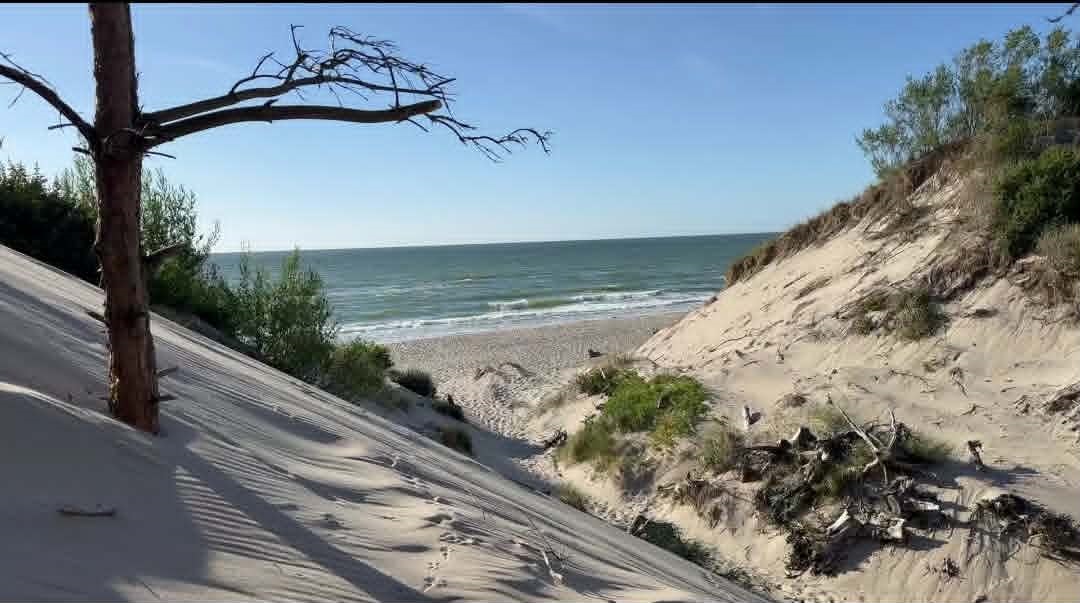
Destroyed foredune near the ZIN RAS Biological Station. July 2026.
Therefore, the draft decision of the Committee states: ‘The development of a coordinated restoration policy for the shores and fore dunes, applicable to the property as whole, remains necessary. As previously recommended by the 2015 Reactive Monitoring mission, such a policy should address both natural processes and human pressures, including recreation and development, and should prohibit or strictly limit construction on the shores and fore dunes in order to safeguard the distinctive cultural landscape of the Spit’.
The draft decision refers to a coordinated policy, and—as the draft decision goes on to state— ‘Lithuania has established a legal framework to ensure the systematic and ongoing reinforcement of the protective dune ridge. The absence of a comparable framework in the Russian Federation raises concerns regarding the consistent protection of the integrity of the dune system across the property’.
On the Lithuanian side, there is the Coastal Zone Management Programme 2023–2032, that keeps the protective coastal dune in excellent condition and ensures that storm damage is immediately assessed and repaired. On the Russian side, damaged dunes are only sporadically repaired by untrained volunteers.
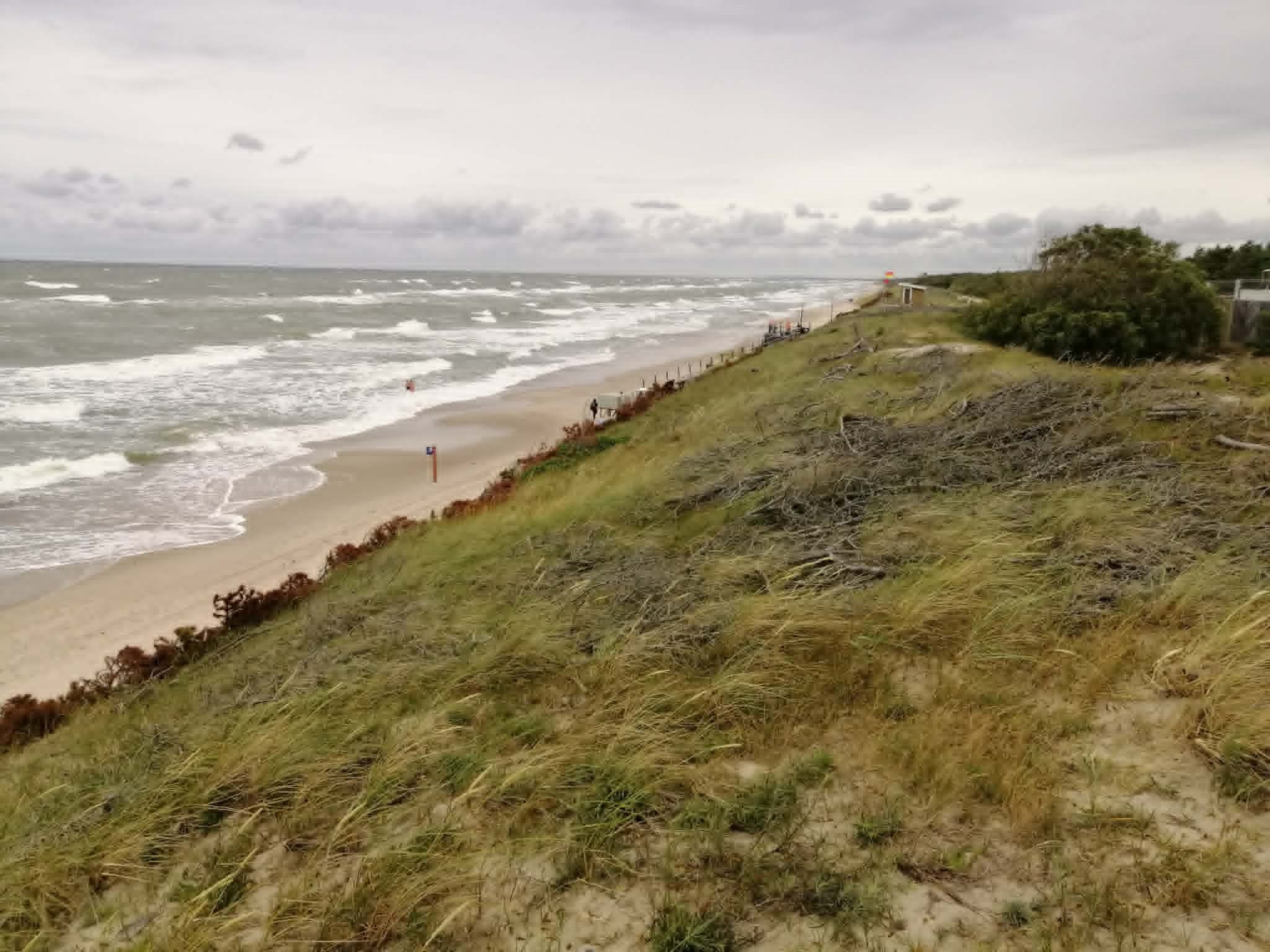
Foredune near Nida (Lithuanian side of the Curonian Spit). July 2026.
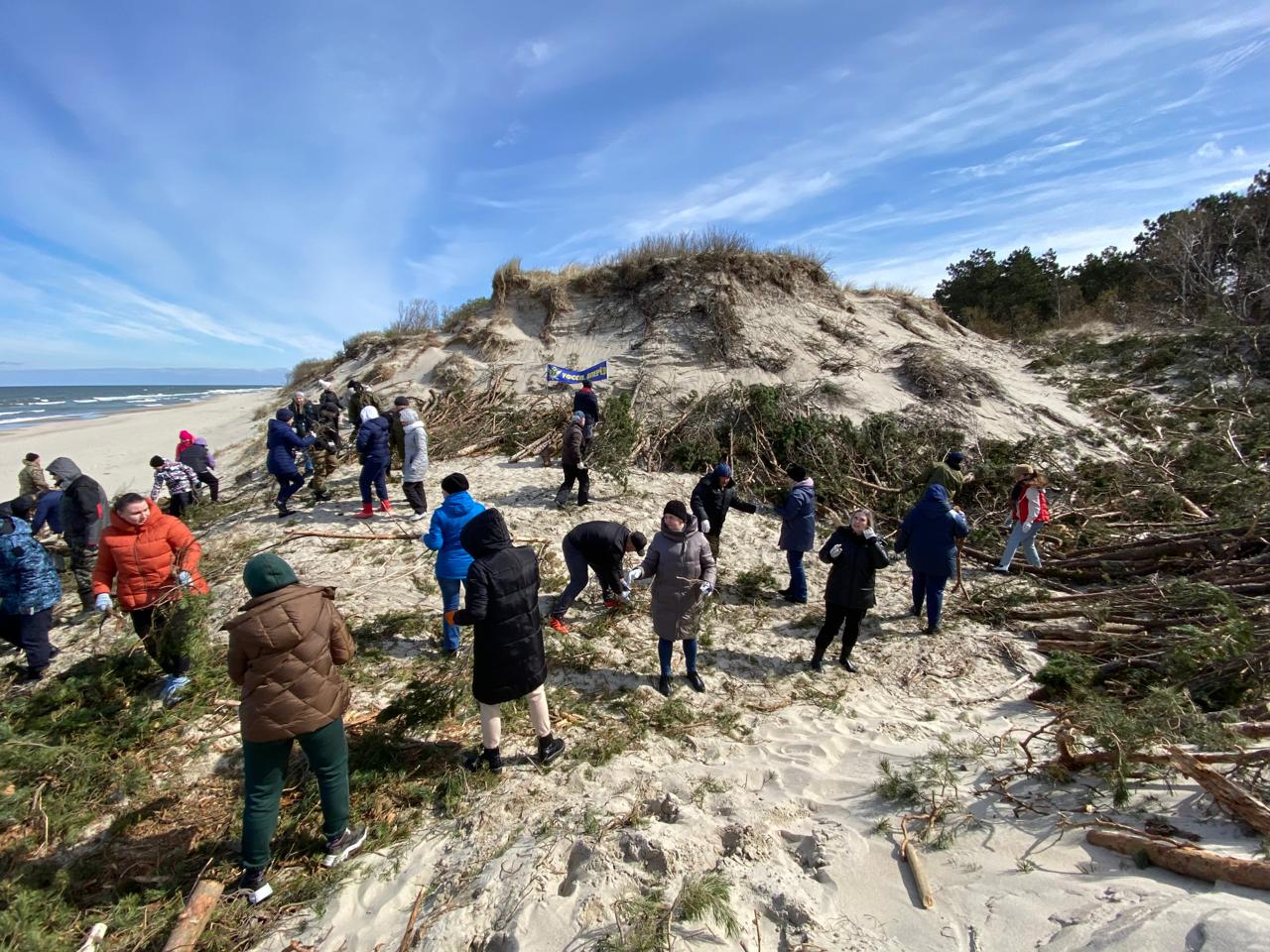
Volunteers are repairing the foredune near the ZIN RAS Biological Station on the Russian part of the Curonian Spit. April 2024. Source: Curonian Spit National Park website.
The only feature that might qualify as a «modern method» is a stone embankment built in 2024 just north of the village of Lesnoye; it measures 350 meters in length, 15 to 20 meters in width, and 4 meters in height. The stones failed to protect the foredune; instead, storm waves scattered them, littering the pristine sandy beach (photo from July 2025).
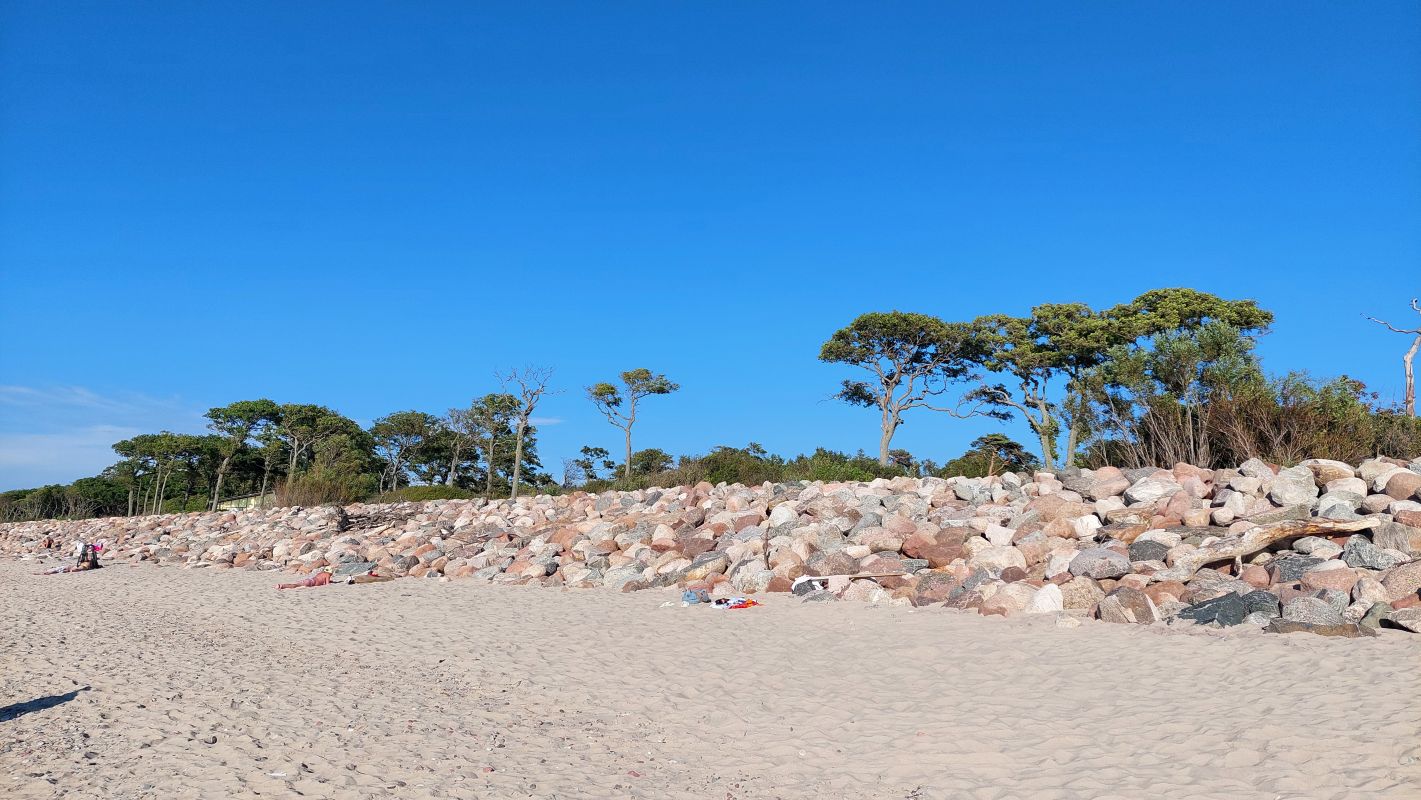
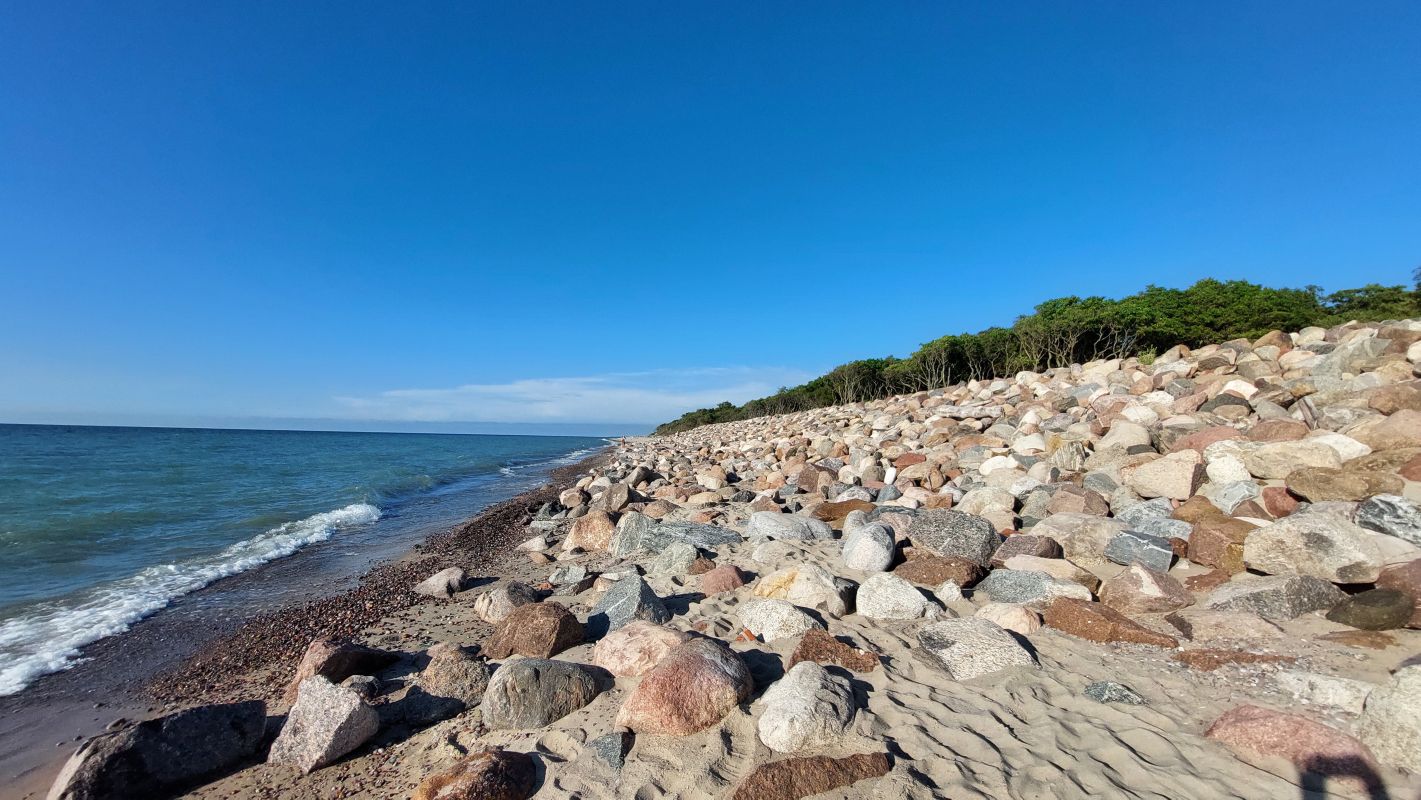
From the draft decision of the Committee: ‘While traditional conservation methods are recognised as providing flexibility and resilience, reference is also made to the use of modern construction methods, the nature, extent and location of which remain unclear. The Committee may wish to request the State Party to provide detailed information on the nature, location and effectiveness of the coastal protection measures applied, including modern construction methods’.
Ahead of the 48th session of the World Heritage Committee, Ecodefense prepared the Statement addressing questions raised in the Committee’s draft decision—questions that will be put to the Russian delegation during the session. The statement was submitted via the Lithuanian delegation and sent to the UNESCO World Heritage Centre.
It is also possible to attend the session online and find out the final decision adopted at the 48th session of the UNESCO World Heritage Committee.


Добавить комментарий